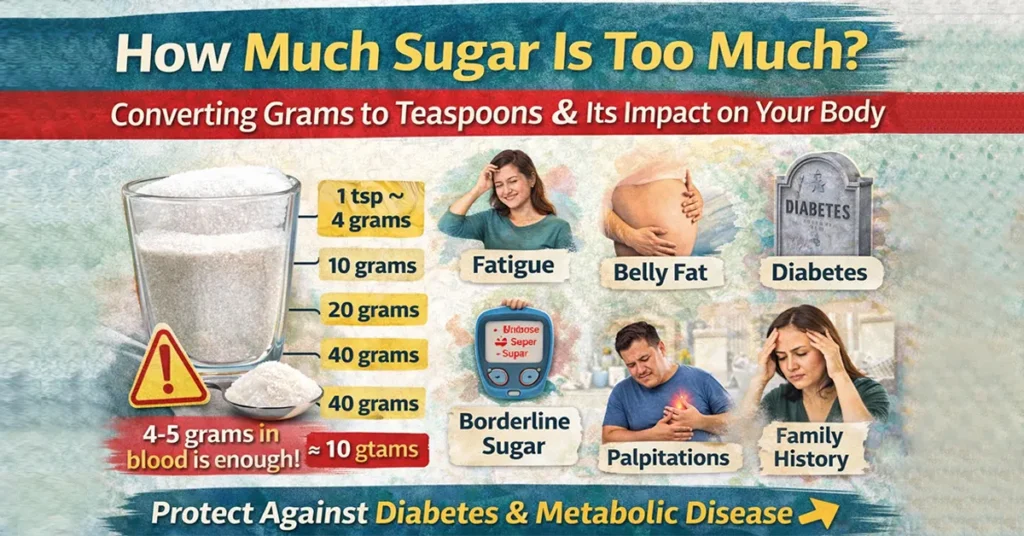
Sugar is everywhere.In your morning tea. In biscuits. In packaged snacks. In fruit juices. Even in so-called “healthy” breakfast cereals. Yet most people ask me only one question:“Doctor, how much sugar is actually too much?” The problem is that we don’t see sugar clearly. Food labels talk in grams, while our kitchens talk in teaspoons. Once you connect the two, the picture becomes very clear—and often shocking. Converting Sugar: Grams to Teaspoons (The Reality Check) Let’s simplify this. 1 teaspoon of sugar ≈ 4 grams 10 grams = 2.5 teaspoons 20 grams = 5 teaspoons 40 grams = 10 teaspoons The World Health Organization (WHO) recommends limiting added sugar to about 25 grams per day—that’s roughly 6 teaspoons. In real life, many Indians consume two to three times this amount daily, often without realising it. Your Body Does Not Need External Sugar to Survive This surprises many patients. Your body can manufacture its own sugar through a process called gluconeogenesis. The liver converts: Stored glycogen Proteins Fats into glucose as needed. This means refined sugar is not essential for survival. Even if you stop eating sugar completely, your body can still supply glucose for: Brain function Muscle movement Organ activity Sugar is a convenience—not a necessity. How Much Sugar Is Actually Present in Your Blood? An average adult has about 5 litres of blood. At normal fasting levels (around 90 mg/dL), the total amount of sugar circulating in your entire bloodstream is only 4–5 grams. That’s roughly 1 teaspoon of sugar. Your body functions perfectly with just one teaspoon of sugar in circulation at any given time. Now think about what happens when you drink a beverage containing 8–10 teaspoons at once. How Sugar Is Used Inside the Body Once sugar enters the bloodstream, different organs respond: Brain: Uses glucose steadily, not in spikes Muscles: Burn glucose during movement and exercise Liver: Stores excess glucose as glycogen (limited capacity) Pancreas: Releases insulin to control blood sugar Fat cells: Convert excess sugar into stored fat The system works beautifully—until overload becomes routine. What Happens When You Consume Excess Sugar Regularly? Repeated sugar spikes force the pancreas to release insulin again and again. Over time: Cells stop responding efficiently to insulin Insulin resistance develops Blood sugar stays high for longer Insulin resistance is the root cause of: Type 2 diabetes Obesity Fatty liver PCOS High blood pressure Heart disease If this continues unchecked, the pancreas becomes exhausted, leading to chronic high blood sugar. Lessons from Nature Animals like lions, cows, goats, deer, and elephants do not consume refined sugar. Yet they maintain stable metabolic health throughout life. Historically, humans also lived without processed sugar. The sharp rise in diabetes closely mirrors the increase in refined sugar consumption, not natural food intake. So, How Much Sugar Is Too Much? If your bloodstream needs only 1 teaspoon at a time, consuming 8–10 teaspoons in one drink or dessert clearly overwhelms the system. Early warning signs often include: Fatigue after meals Frequent hunger Belly fat Sweet cravings Borderline blood sugar levels Family history of diabetes These are signals, not coincidences. Can Diabetes Be Reversed? Yes—insulin resistance can be reversed, especially in the early and middle stages. This is where structured, root-cause-based care becomes important. Many patients today actively explore Ayurvedic treatment for diabetes because it focuses on correcting metabolism, digestion, lifestyle, and insulin sensitivity—not just suppressing sugar numbers. A Root-Cause Approach to Metabolic Health At Madhavbaug Clinics and Hospitals, we follow a scientifically designed, non-invasive, Ayurvedic-integrated model aimed at: Reducing insulin resistance Improving pancreatic efficiency Supporting liver metabolism Correcting weight and lipid imbalance Protecting long-term heart health This approach complements modern type 2 diabetes treatment by addressing why sugar rises—not just how to lower it temporarily. Thousands of patients have shown improvement in: HbA1c Weight Blood pressure Lipid profile Energy levels and stamina What You Can Do Starting Today Read food labels carefully Convert grams to teaspoons mentally Reduce sugary drinks and packaged foods Eat home-cooked, balanced meals Move your body daily Sleep on time Monitor sugar levels regularly Small daily corrections prevent big future complications. Final Message for Readers Sugar doesn’t harm you overnight.It harms you quietly, daily, and consistently. Understand how much you consume. Respect how little your body actually needs.Correct early—and you can prevent or reverse disease before medication becomes lifelong. Why Your Glucose Tolerance Test (GTT) Matters in Diabetes Reversal A Glucose Tolerance Test (GTT) evaluates how efficiently your body processes sugar after consuming a measured glucose solution. In people with diabetes or prediabetes, the GTT often remains positive due to underlying insulin resistance. At Madhavbaug, our diabetes reversal approach focuses on addressing this root cause. Through structured, non-invasive Ayurvedic protocols aimed at reducing insulin resistance, many patients experience improved sugar metabolism—and over time, some even achieve GTT-negative results under medical supervision.

Many patients walk into my OPD worried and confused.Some panic the moment they hear the words “heart blockage.”Others ask, “Doctor, is a blockage the same as a heart attack?” Let me say this clearly—heart blockage Vs heart attack is one of the most misunderstood topics in cardiac care. And misunderstanding it often leads to dangerous delays. Once you understand the difference, you’ll also see why heart blockage should be managed early—before it becomes an emergency. First Things First: They Are NOT the Same A heart blockage and a heart attack are related—but they are not identical conditions. Think of heart blockage as a slow warning process, and heart attack as a crisis. 1) What Is Heart Blockage? Heart blockage usually means fat plaque buildup inside the coronary arteries, the blood vessels that supply oxygen to your heart muscles. This condition is called atherosclerosis. What Is Fat Plaque Made Of? Fat plaque is a slow-forming mix of: Cholesterol Fat particles Calcium deposits Inflammatory cells This buildup happens gradually over many years, often without obvious symptoms in the early stages. That is why many people live with a blockage without realising it. 2) What Is a Heart Attack? A heart attack is sudden and dramatic. It usually occurs when a blood clot forms abruptly over an existing plaque and completely blocks blood flow to a part of the heart muscle. This can happen in minutes—sometimes even seconds. What Is a Blood Clot Made Of? A blood clot mainly consists of the following: Platelets Clotting proteins like fibrin This is why a heart attack is a medical emergency, requiring immediate hospital care. 3) Fat Plaque vs Blood Clot: The Simplest Explanation Fat Plaque (Heart Blockage) Develops slowly over the years Made mainly of cholesterol and fat Chronic condition May reduce blood flow gradually Not everyone with plaque gets a heart attack Blood Clot (Heart Attack Trigger) Forms suddenly Made mainly of platelets Acute emergency Abruptly blocks the blood supply Can damage the heart muscle within minutes 4) Why This Difference Matters So Much Here’s the most important point I tell my patients: Heart blockage gives you time. A heart attack does not. A blockage is your body’s warning bell.A heart attack is what happens when that warning is ignored for too long. The right strategy is early blockage management, not waiting for a crisis. 5) Can You Have a Blockage Without a Heart Attack? Yes—very commonly. Many people live with heart blockage for years and never experience a heart attack, especially when the blockage is minor. Cholesterol is controlled Sugar levels are managed Weight is reduced Stress and lifestyle factors are corrected Heart attacks usually occur when a plaque becomes unstable and suddenly forms a clot. 6) One Is Chronic, the Other Is Acute Heart blockage → Chronic, progressive condition Heart attack → Sudden, life-threatening emergency Understanding this difference helps patients take action at the right time. 7) Symptoms: When to Rush to the Emergency? Heart Attack Symptoms (Emergency – Act Immediately) Sudden chest pressure or pain Pain spreading to the arm, jaw, neck, or back Profuse sweating Nausea or vomiting Sudden breathlessness Collapse or fainting Call emergency services immediately. Do not wait. Heart Blockage Symptoms (Often Gradual) Breathlessness while walking or climbing stairs Chest heaviness on exertion Easy fatigue Reduced stamina These symptoms are often ignored or attributed to “age” or “lack of fitness”, which is risky. 8) Can Heart Blockage Be Managed Without Surgery? In many stable, non-emergency cases, heart blockage can be managed conservatively under strict medical supervision.Some patients may still require angioplasty or bypass surgery, depending on the severity. However, structured programs focusing on circulation, metabolism, and lifestyle can help selected patients explore heart blockage treatment without surgery—always under doctor guidance. 9) Madhavbaug Khopoli Hospital: Blockage Management Therapy Program At Madhavbaug Khopoli Hospital, we follow a structured, non-invasive, doctor-supervised approach for chronic blockage cases. The programme includes: Blockage Management Therapy Ischemia Reversal Panchakarma Therapy Program 3-Month Reverse Diet Kit The goal is to support: Better blood circulation Reduced cardiac stress Improved stamina and exercise tolerance Better metabolic control (cholesterol, sugar, weight) This approach focuses on long-term stability, not just temporary symptom relief—an integrative model of heart blockage treatment. 10) What Does Research Say? (In Simple Words) Global cardiac research shows that: Plaque progression can be slowed Overall, cardiac risk can be reduced Lifestyle and metabolic correction play a major role Studies related to ischaemia-reversal-based programs have reported improvement in heart function markers in chronic heart disease patients. Important: Results vary based on individual condition, severity, and adherence. 11) A Clear Message for Patients Do not wait for a heart attack to “confirm” heart disease. If you have: Breathlessness on exertion Chest heaviness Fatigue with reduced stamina Your heart may already be asking for help. Book your Blockage Management Evaluation today at Madhavbaug Khopoli Hospital
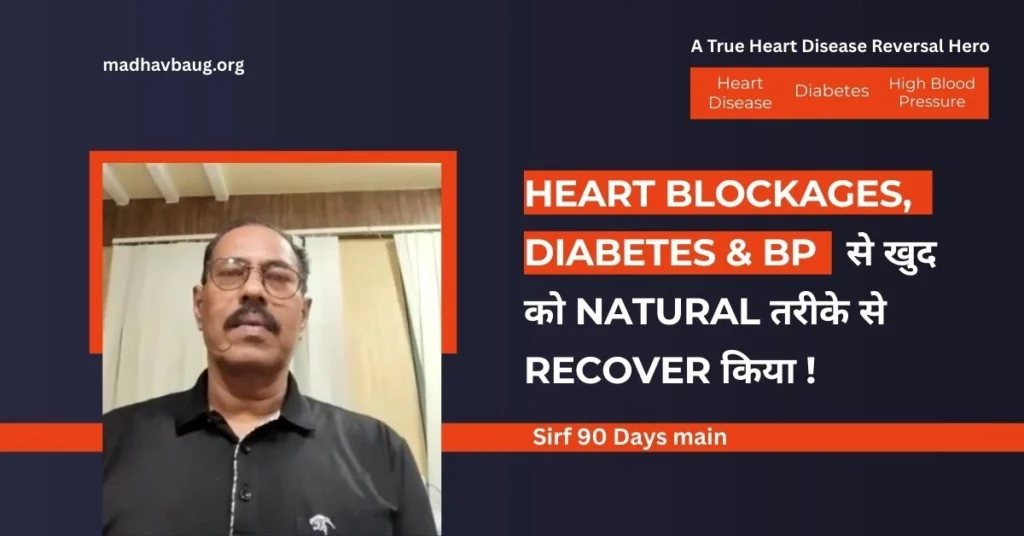
यह case study — 55 Years Suhas Dhawade heart and diabetes reversal की है — जिन्होंने heart blockages, long-standing diabetes और uncontrolled BP के साथ severe chest pain के बाद monitored Madhavbaug program अपनाया। तीन-चार महीनों में clinically measurable improvements और life-changing functional gains दर्ज हुए। Suhas ji ने Panchakarma, diet modification और cardiac rehab से weight loss, BP control और diabetes reversal पाए — यह एक documented heart and diabetes reversal case study है। यह 55 Years Suhas Dhawade heart and diabetes reversal case study बताती है कि कैसे उन्होंने monitored Ayurvedic program से weight loss, BP control और diabetes में clinically measurable सुधार किया और heart pain से आराम पाया। Patient Profile Name Suhas Dhawade Age 55 Years Profession Cable Operator (30+ years) History Diabetes (12 years), High BP, Chest pain Clinic Madhavbaug Dhantoli Under care Dr. Sumera Imran Heart Scare — The Day Everything Changed Suhas ji बताते हैं: “Chest में बहुत ज़्यादा दर्द हुआ।” hospital reports में critical blockages की चेतावनी मिली और surgery nearly decide हो चुकी थी। पर परिवार के सुझाव पर वे Madhavbaug आए — और वही मोड़ उनकी जीवन-यात्रा बदल गया। A Surprising Twist — Heart के साथ Diabetes और BP भी संबद्ध थे पिछले 12 वर्षों से diabetes और uncontrolled BP उनकी underlying metabolic stress बढ़ा रहे थे। excess weight और sedentary routine ने condition को complex बना दिया था। Suhas ji ने बताया: “मुझे पता ही नहीं था कि diabetes अंदर से कितना कमजोर कर रही है।” Madhavbaug Treatment Begins — A 360° Recovery Plan Dr. Sumera Imran ने Suhas ji के लिए एक integrated, medically supervised plan बनाया। उनका उद्देश्य था heart function improve करना, metabolic reset करना और medicines को सुरक्षित तरीके से taper करना। Treatment Components Cardiac-specific Panchakarma Cardio-metabolic monitoring (BP, sugar, lipids) Insulin-sensitivity diet and weight loss plan Graded walking & breathing exercises Stress management and behavioural counselling Medicine reduction protocol under supervision Daily lifestyle tracking & family support सुघास जी कहते हैं—“मैं तो सिर्फ़ heart के लिए आया था, पर यहाँ मेरा diabetes और BP भी ठीक हो गया।” The Transformation — 3–4 Months में परिणाम Clinical Improvements (Before → After) Parameter Before After (3–4 months) Weight 97.6 kg 77.9 kg BMI 31 24.87 Abdominal Girth 111 cm 92 cm BP 180/100 130/80 VO₂ Max 29.05 36.05 Stress Test Positive Negative Angina Present Absent HbA1c High Normal GTT Positive 7 Times Negative Allopathy Medicines Multiple Many stopped सबसे बड़ा परिणाम था weight loss और metabolic correction — जिस वजह से BP control हुआ और diabetes reversed। यह documented heart and diabetes reversal case study patient adherence और clinician-led protocol का परिणाम है। Doctor Insights — Why This Recovery Was Possible Dr. Sumera Imran बताती हैं: “Suhas ji की case complexity थी—blockages, diabetes, BP और overweight. पर उनके discipline और family support के कारण Panchakarma, diet और exercise ने arteries की elasticity और metabolic profile दोनों पर positive असर डाला। VO₂ और stress tolerance बढ़े — इसलिए clinically meaningful reversal संभव हुआ।” Suhas Ji’s Transformation Mindset — The Real Hero Suhas ji का message सरल है: “Patient जब decision ले ले कि उसे ठीक होना है तो कुछ भी असम्भव नहीं।” उन्होंने daily exercise goals और diet को family के साथ follow किया और परिणाम खुद बोले। Emotional Impact — Family Fear to Family Relief पहले परिवार worried था कि surgery unavoidable है; आज वही परिवार आनंद और relief में है क्योंकि Suhas ji फिर से active और energetic हैं। Why This Story Matters — A Message for Every Heart & Diabetes Patient यदि आप सोचते हैं “blockages = सिर्फ surgery” या “diabetes कभी reverse नहीं होती” — Suhas ji की journey बताती है कि integrated, medically supervised natural care combined with lifestyle discipline से improvements संभव हैं। पर निर्णय हमेशा clinician evaluation के बाद ही लें। Related Treatment Pages More about related treatments: heart blockage treatment weight loss treatment in ayurveda ayurvedic treatment for diabetes high blood pressure treatment Clinic Details Treatment is given at the Madhavbaug Ayurvedic Clinic in Dhantoli, Nagpur. This is a top Ayurvedic cardiac care center. It is known for managing heart blockages without surgery. The clinic also offers research-based lifestyle therapies. Looking to visit us in person? 📍 View Madhavbaug Dhantoli, Nagpur on Google Maps and plan your visit with ease.यदि आप एंबरनाथ के बाहर हैं, तो भी नज़दीकी क्लिनिक में अपॉइंटमेंट बुक कर सकते हैं। 🔎 Find a Madhavbaug Clinic Near You and begin your heart-health recovery journey naturally with expert-guided Ayurvedic cardiac care. Nationally Honoured & Media-Featured Leader in Heart Blockage Care Madhavbaug has earned national recognition for its contributions to non-surgical cardiac care and lifestyle-based disease reversal. The organization has been featured across major media for its clinical research and high-impact public health initiatives.In 2018, Madhavbaug reached a big milestone in the India Book of Records. They did 661 live GTT assessments in one day at many clinics. This achievement was reported by major news platforms. In 2023, Madhavbaug further strengthened its clinical authority by training 65 government medical officers in Uttarakhand on evidence-based, Ayurveda-integrated disease reversal protocols.Madhavbaug has received over 200 awards. These awards are for excellence in healthcare, innovation, and patient outcomes. Madhavbaug is one of the most trusted names in heart blockage treatment without surgery in India. Frequently Asked Questions 1. क्या heart blockages और diabetes को साथ में सुधारना संभव है? कुछ clinically supervised cases में integrated Panchakarma, diet modification और cardiac rehab से measurable improvements देखे गए हैं। यह patient-specific और clinician-supervised होना चाहिए। 2. क्या surgery के बिना recovery संभव है? कुछ मरीजों में monitored non-surgical cardiac care effective हो सकती है। पर surgical decisions हमेशा cardiology evaluation पर निर्भर करते हैं। 3. क्या weight loss treatment in ayurveda से blood pressure और diabetes में मदद मिलती है? Yes — structured Ayurvedic weight management combined with diet and exercise can improve metabolic parameters and support BP and glucose control under supervision.
Many people wonder why their belly fat isn’t reducing even with dieting and daily walks. This story helps you understand seven science backed reasons behind stubborn abdominal fat and how Ayurvedic Panchakarma with structured nutrition can support healthier, long-term fat loss.

If you spend long hours at a desk, glued to your laptop, barely moving between meetings, and relying on chai, snacks, or stress to survive the day — you’re not alone.
But here’s something most working professionals across Tier-1, Tier-2 cities don’t realize:High BP Sedentary workdays are one of the biggest hidden triggers .

Learn how sedentary work triggers silent heart blockages and how Madhavbaug helps reverse them naturally through Ayurveda, ECG screening, and lifestyle correction.

